Electrodes for Membrane Chlor-Alkali ElectrolyzersYIANTENG supplies MMO-coated anodes and activated cathodes for membrane chlor-alkali electrolyzers, supporting efficient gas evolution, stable cell voltage and reliable long-term operation. | 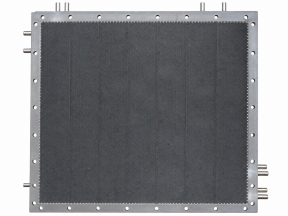 |
|
|
Membrane Chlor-Alkali TechnologyMembrane chlor-alkali electrolysis produces chlorine, hydrogen and high-purity caustic soda from purified brine. Reliable production depends on the coordinated performance of the ion-exchange membrane, electrode geometry, catalytic coating and operating conditions. YIANTENG applies advanced coating formulations and controlled manufacturing processes to anodes and cathodes for a wide range of membrane electrolyzers. Compatible cell families include Asahi Kasei NCH, AGC F1/F2/B1/M3, BiTAC, Bluestar (Beijing) Chemical Machinery, De Nora, INEOS BiChlor and thyssenkrupp nucera BM2.7. We also provide electrode repair and recoating services based on customer drawings and operating requirements. |
How Membrane Chlor-Alkali Electrolysis WorksPurified brine enters the anode chamber, where chloride ions form chlorine gas. Sodium ions cross the cation-exchange membrane into the cathode chamber; there, water forms hydrogen and hydroxide ions, producing high-purity caustic soda. The membrane keeps the chlorine-bearing anolyte separate from hydrogen and caustic soda. 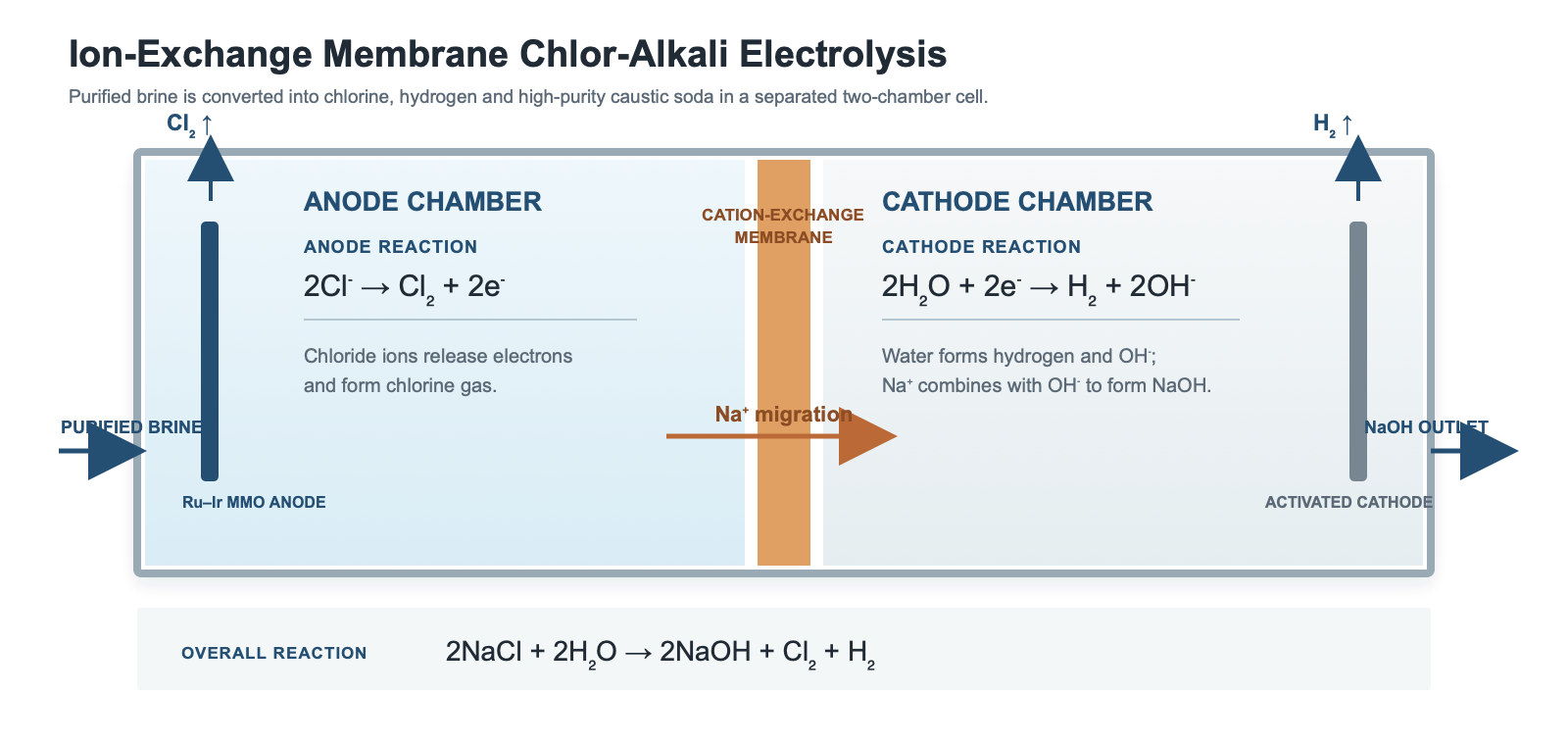 |
Why the MMO Electrode MattersThe anode is not merely a current carrier. Its Ru–Ir mixed-metal-oxide surface controls how efficiently chlorine is evolved, how evenly current travels across the cell and how stable the cell voltage remains. In a continuously operating caustic-soda plant, small losses at the electrode are multiplied across every cell and every operating hour. Low Chlorine OverpotentialAn active Ru–Ir oxide surface reduces the anodic contribution to total cell voltage, helping control electricity consumption. |
| Selective Chlorine EvolutionA correctly matched formulation promotes chlorine formation in purified brine and helps limit competing oxygen evolution. |
| Stable Current DistributionUniform coating and controlled geometry support even current loading, orderly gas release and predictable cell performance. |
| When electrode quality is unstable | Rising chlorine-evolution potential, non-uniform coating or weak adhesion can increase cell voltage, create local current concentration, disturb gas release, increase oxygen in chlorine, accelerate coating loss and shorten the maintenance interval. In severe cases, unstable electrode geometry or damaged surfaces can also place additional stress on the membrane and force an unplanned cell shutdown. |
|
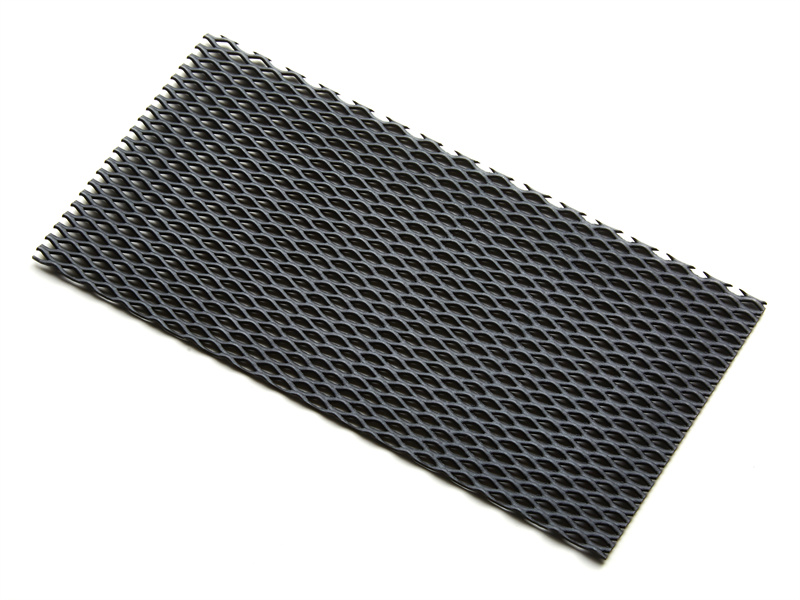
YIANTENG Electrode Advantages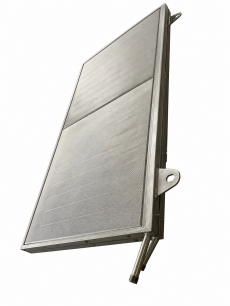 | Application-Matched Coating FormulationRu–Ir oxide composition and loading are selected around the cell type, brine chemistry, current density, operating temperature and required service interval. Controlled Chlorine-Evolution PotentialElectrochemical response is checked to control the anodic voltage contribution and support efficient chlorine production under the agreed test conditions. Accelerated-Life VerificationCoating durability can be evaluated through defined accelerated-life conditions, providing comparative evidence for formulation and process stability before field service. Recoating and RefurbishmentServiceable electrode structures are stripped, inspected, repaired where required and recoated, helping recover performance without replacing the entire assembly. Uniformity and Adhesion ControlSurface preparation, repeated coating application and thermal conversion are controlled to obtain consistent coverage and strong bonding between the substrate and catalytic layer. |
Final acceptance values for potential, coating loading, accelerated life and dimensional tolerances should be stated in the project specification for the relevant cell model and operating conditions. |

Send a message