Titanium anodes for Aluminum Foil Formation
Ir-Ta MMO and platinized titanium anodes for the power-feeding tanks of capacitor foil formation lines, matched to the electrolyte, current density and line layout.
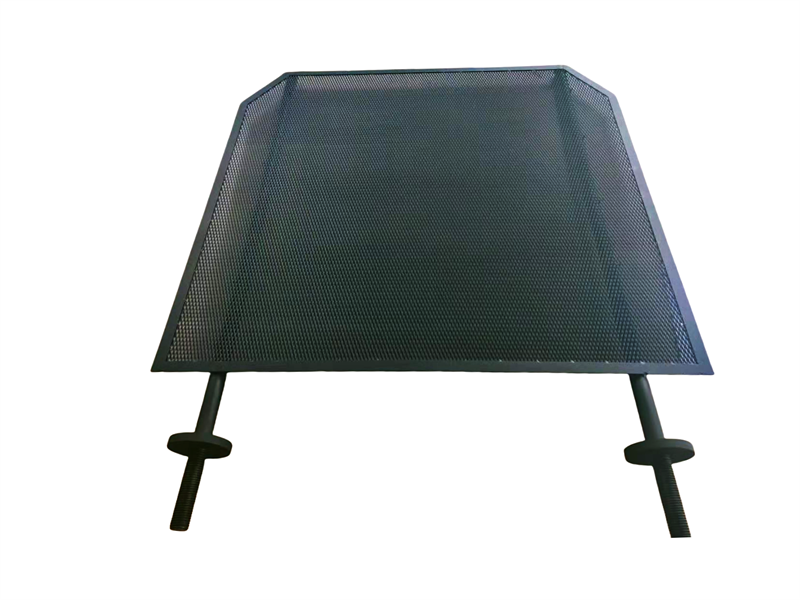
Aluminum foil formation
Etched aluminum foil is anodized in borate, adipate or phosphate solutions to grow a thin Al2O3 film. This oxide is the dielectric of the aluminum electrolytic capacitor.
Oxide thickness is proportional to the formation voltage, so stable, evenly distributed current across the foil width is essential for consistent capacitance and low leakage current.
Where the titanium anode works
On liquid power-feeding lines, the titanium anode passes current through the electrolyte into the moving foil without mechanical contact. In the formation tank, the foil then acts as the anode and the oxide film grows.
Power-feeding tank
Titanium anode (+) → electrolyte → foil (−)
Foil →
current carried by the moving foil
Formation tank
Foil (+): 2Al + 3H2O → Al2O3 + 6H+ + 6e−
How anode condition affects the foil
Problems at the feeding anode usually show up first as unstable line voltage or inconsistent foil quality.
| Symptom | Possible causes |
|---|---|
| Feed-tank voltage keeps rising | Coating deactivation, scale on the active surface or deteriorating electrical contacts. |
| Uneven oxide across the foil width | Uneven current distribution from a distorted plate, a changed gap or non-uniform coating. |
| Higher leakage current | Contamination from a soluble or shedding anode, such as lead-alloy corrosion products. |
| Sparking or foil damage | Deformed electrodes reducing the anode-to-foil gap. |
| Frequent electrode changes | Coating not matched to the electrolyte or current density. |
Titanium anode vs lead-alloy anode
| Factor | MMO / platinized titanium | Lead-alloy anode |
|---|---|---|
| Geometry | Flat, dimensionally stable plates | Creeps and deforms in service |
| Electrolyte purity | No dissolution of the titanium body | Corrosion products can reach the foil |
| Current distribution | Even across the foil width | Shifts as the surface changes |
| Weight and handling | Lightweight titanium | Heavy lead plates |
| Maintenance | Strip and recoat the substrate | Replace consumed anodes |
Why YIANTENG titanium anodes
Coating matched to the electrolyte
Ir-Ta MMO for oxygen-evolving feed electrolytes, or platinum for special conditions.
Uniform loading
Even coating across the plate width supports even current into the foil.
Flat, stable plates
Controlled flatness and dimensions keep the feeding gap constant.
Custom design
Plate size, holes, edges and conductive connections built to your tanks.
Grade 1 / Grade 2 titanium
Valve-metal substrate selected for current load and service life.
Recoating service
Used titanium plates are stripped, inspected and recoated.

Send a message