water heater anode rod
At present, the magnesium rod sacrificial anode protection method is often used on the market to protect the inner tank, but the magnesium rod consumes quickly, has a short life, and easily pollutes the water quality. Some manufacturers have begun to choose electronic anodes to prevent corrosion, which can effectively avoid the defects of traditional magnesium anodes. In the electronic anti-corrosion system, the performance and material selection of the auxiliary anode directly affect the protection effect.
The optional auxiliary anode materials for electronic anodes are: graphite, high silicon cast iron, platinum composite anode, polymer anode, metal oxide anode, etc. Due to the limitations of the first two anode materials in high temperature environments, and the high cost of platinum composite anodes, oxide-coated titanium anode rod anode wire, as a new, efficient, stable and cost-effective auxiliary anode, is used in cathodic protection. has a good prospect of use.
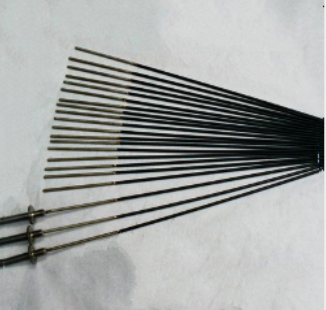
Electronic anode rod anti-corrosion anode protection principle:
1. The mixed metal oxide anode acts as an auxiliary anode to provide cathodic current to the cathode steel plate (or the exposed metal part of the enamel corrosion), so that the steel plate (or the exposed metal) is cathodically polarized, and a large amount of electrons are released at the same time, so that the potential difference between the cathode and the anode changes. Small until it disappears, effectively inhibiting the process of corrosion and dissolution.
2. Under the action of cathodic polarization, a redox reaction occurs at the interface between the steel body and the water, and a white-like calcareous layer is formed on the protected cathode body, especially in hot water with high hardness, the surface of the cathode body is It is easier to form a deposited calcareous layer, which can block the contact between the protected material and the corrosive medium, and strengthen the effect of cathodic protection.