Application of Titanium Anode in Electrodialysis
Desalination of seawater by electrodialysis
Desalination of seawater by electrodialysis is achieved through electrodialysis desalinators. Desalination principle of desalinator, under the action of an external DC electric field, when the raw water containing salt flows through the compartment composed of anion and cation exchange membranes and separators, the anions and cations in the water begin to move directionally, the anions migrate towards the anode, and the cations move towards the anode. Cathodic direction migration. Due to the selective permeability of the ion exchange membrane, the fixed exchange group of the cation exchange membrane (referred to as the cation membrane) is negatively charged, thus allowing the cations in the water to pass through and blocking the anions. The fixed exchange group of the anion exchange membrane (anion membrane for short) is positively charged, so it allows the anions in the water to pass through and blocks the cations, causing the ions in the fresh water compartment to migrate to the concentrated water compartment, so as to achieve the purpose of desalination.
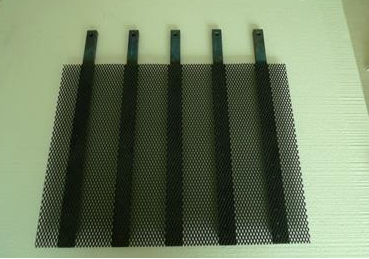
Seawater and brackish water desalination can desalinate brackish water with a salt content of up to 60g/L into drinking water, solving the drinking water problem in desert areas. Electrodialysis desalinators are widely used in food, light industry and other industries to produce pure water; electronic, pharmaceutical, chemical and other industries to produce high-purity water pretreatment; primary softening and desalination of boiler feed water; desalination of seawater into drinking water and certain chemical products. Desalination treatment, etc.
Electrode material is one of the key components of electrodialysis desalinator. This electrode material requires both oxidation resistance and reduction resistance, that is to say, it can be used as both an anode and a cathode, but general electrode materials cannot meet this requirement. For example, graphite electrodes will corrode quickly and have a short working life. At present, the ideal electrode is a multi-component metal anode containing iridium as the best, which can not only meet the requirements of electrode inversion, but also have lower overpotential, power saving performance, and service life is longer than that of ordinary ruthenium-titanium coating The metal anode is long.
Preparation of Tetramethylammonium Hydroxide by Electrodialysis
Tetramethylammonium hydroxide is a commonly used polymerization catalyst for the synthesis of silicone rubber and silicone oil.
In the past, the preparation process included the reaction of tetramethylammonium iodide aqueous solution with silver oxide; the reaction of tetramethylammonium chloride and potassium hydroxide in methanol solution; ion exchange resin technology, etc. These processes are complicated and contain many impurity ions. Bringing in products, raw materials (such as silver oxide) are expensive, and it is difficult to achieve industrialization.
Electrodialysis can directly produce high-purity tetramethylammonium hydroxide, which has the advantages of low raw material cost, small equipment, large production capacity and simple process.
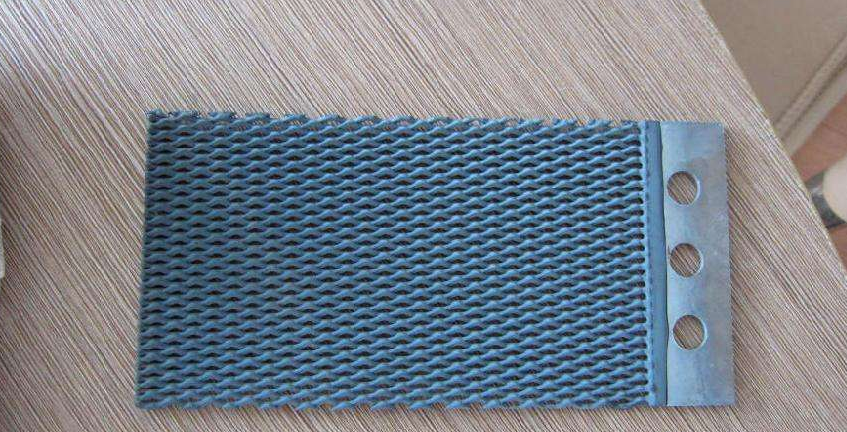
The electrodialysis cell is divided into bipolar chambers by perfluorinated cation exchange membrane, the anode uses active-coated titanium electrode, and the cathode is stainless steel. A 30% aqueous tetramethylammonium chloride solution was injected into the anode compartment, and a 2% aqueous tetramethylammonium hydroxide solution was injected into the cathode compartment. After the direct current is turned on, an electrochemical reaction occurs on the two electrode plates. The current density is 11A/d㎡, and the cell voltage is 10V, and the current efficiency is about 80%. Obtained ammonium hydroxide with a concentration of about 15%. The product pentahydrate and ammonium hydroxide crystals can be obtained by concentration under reduced pressure.
Recovery of Nickel from Nickel Plating Wastewater by Electrodialysis Electrolysis
For a long time, ion exchange, electrodialysis and other methods have been used for the treatment of nickel-plating wastewater. The essence of these methods is to concentrate the wastewater and reuse it. However, during the concentration process, the impurities in the wastewater are also concentrated and reused. It is very inconvenient or cannot be reused at all. Many electrochemists try to recover metallic nickel from nickel-containing wastewater by electrolysis. For nickel-containing wastewater, the standard electrode potential of nickel is originally negative (-0.25V). During electrolysis in dilute solution, the precipitation potential of nickel becomes more negative due to concentration polarization, and hydrogen is preferentially precipitated in large quantities, while The cathode current efficiency for nickel precipitation is extremely low, and there is even no nickel precipitation. Therefore, it is impossible to obtain good results by electrolytic recovery of metallic nickel from low-concentration nickel-plating wastewater by increasing the cathode surface area and reducing the current density. Only by trying to increase the concentration of nickel ions near the cathode surface can it be effectively improved The current efficiency of electrolytic recovery of nickel can also be used to successfully recover metallic nickel from nickel-plating wastewater by electrolysis.
The combined method of electrodialysis and electrolysis recovers metallic nickel from nickel-containing wastewater, and is called electrodialysis electrolysis. The basic principle of this method is that the ion exchange membrane has the effect of selectively permeating ions of different electrical properties, that is, in the electrolyte solution, the anion exchange membrane allows cations to pass through and blocks anions; the cation exchange membrane allows anions to pass through and blocks cations . Therefore, under the action of the electric field, the solution action can effectively make the nickel ions in the wastewater migrate to the cathode chamber, the anions such as sulfate ions in the intermediate chamber enter the anode chamber through the cation exchange membrane, and the cations such as nickel ions can pass through the anion exchange membrane. The membrane enters the cathode chamber, so that if a higher concentration of nickel ions can be maintained in the solution in the cathode chamber, the nickel ions can be deposited as metals at the cathode with higher current efficiency. The nickel ion concentration in the intermediate chamber is gradually reduced to achieve the purpose of treating wastewater and recovering metallic nickel.
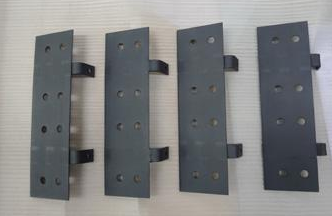
The electrodialysis electrolysis unit contains three cathode compartments, four anode compartments and six circulation compartments. The cathode is made of stainless steel, and the anode is made of insoluble titanium anode. When the pH value of the wastewater is about 5, the metal nickel can be efficiently recovered by controlling the appropriate current density. The nickel-plating wastewater containing about 1g/L of nickel ions is treated to about 50mg/L, and the average current efficiency can reach more than 60%. The purity of the recovered nickel is over 99.7%.