How PTL Structure Influences PEM Electrolyzer Performance
Engineering porous titanium PTLs for efficient and durable PEM electrolysis
PEM water electrolysis is gaining attention because of its high current-density capability, rapid response and compatibility with renewable power. PTL performance, however, is not determined by porosity alone. The material must balance mass transport, electrical contact and mechanical stability.
At a glance
●Efficient water delivery and oxygen removal
●Low interfacial contact resistance
●Stable support for the membrane electrode assembly under compression
Why the PTL matters
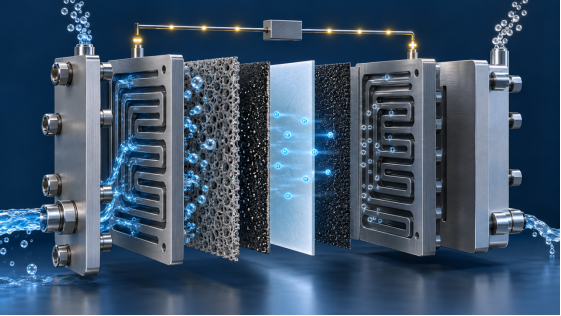
Located between the catalyst layer and the bipolar plate, the porous transport layer supplies water to the oxygen-evolution interface, provides pathways for oxygen removal, conducts current and supports the membrane electrode assembly.
These functions are interdependent. A highly open structure may improve gas-liquid transport but reduce contact with the catalyst layer. A denser structure can improve interfacial contact while restricting oxygen removal. The objective is therefore to select the right balance for the stack design and operating conditions.
YIANTENG Porous Titanium PTL Solution
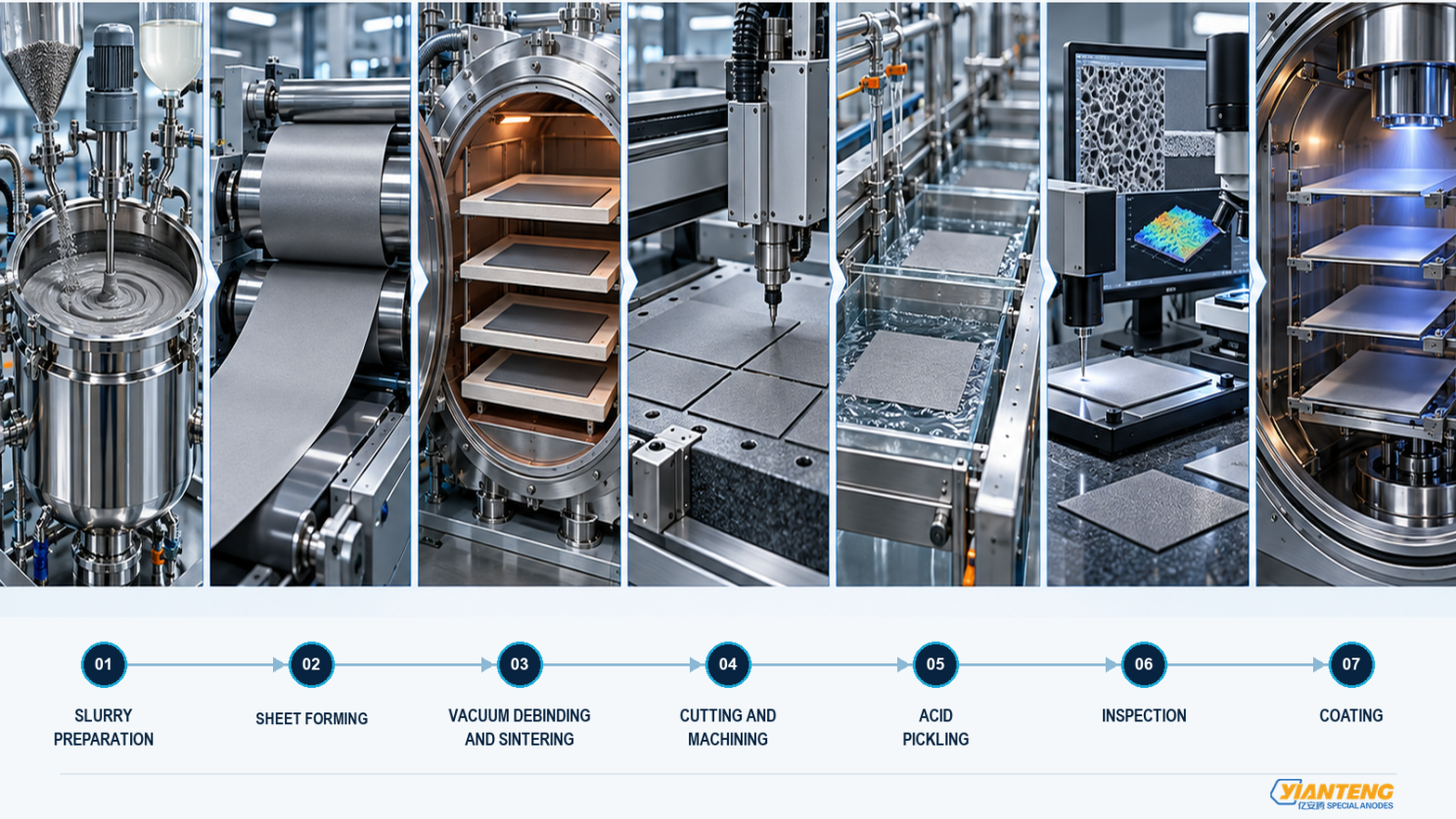
YIANTENG controls the manufacturing sequence from slurry preparation and precision tape casting to controlled debinding, vacuum sintering, surface treatment and inspection. Integrated process control supports consistent thickness, pore structure, surface roughness and mechanical properties across production batches.
1. Optimized Pore Structure Design
YIANTENG porous titanium solutions can utilize engineered straight-through pore structures, where vertically aligned micro-channels create more efficient transport pathways.
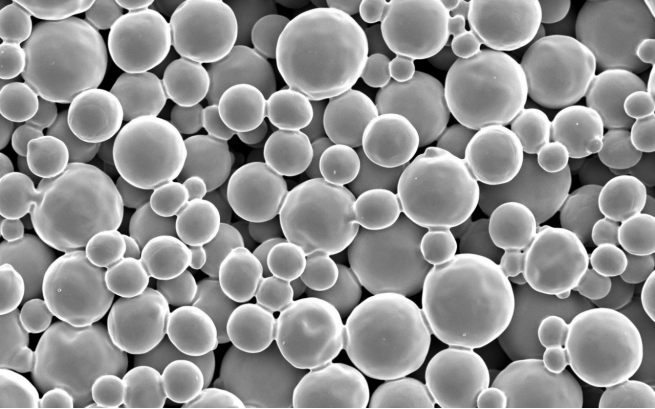
Compared with randomly distributed pore networks, straight-through pore structures provide:
Improved Mass Transport
The optimized channels facilitate:
●Faster water supply to the catalyst layer
●More efficient oxygen bubble release
●Reduced mass transport resistance under high current density operation
Lower Interfacial Resistance
The smooth, low roughness surface helps enable the use of thinner proton exchange membranes (≤80 μm) while maintaining electrolyzer performance. Also it can increase the effective contact area between the PTL and the membrane electrode assembly (MEA), significantly reducing interfacial contact resistance. In comparative testing, this can increase current density by approximately 10–20% at the same cell voltage.
Optimized surface contact helps:
Reduce electrical contact resistance
Minimize ohmic losses
Improve overall stack efficiency
Enhanced Mechanical Stability
Uniform pore distribution helps achieve more consistent pressure distribution within the MEA structure. This reduces local stress concentration and contributes to long-term operational stability.
2.Suitable for Graded Porosity Design
For further performance optimization, sintered porous titanium can be integrated into multi-layer PTL structures with engineered pore gradients
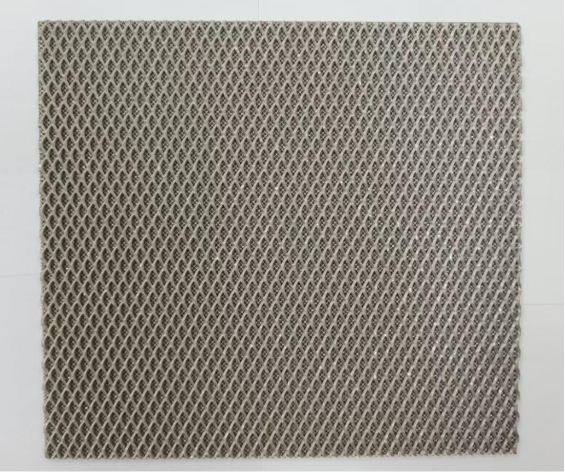
In a typical composite design, a fine porous titanium layer is positioned close to the MEA/catalyst layer to improve interfacial contact, current distribution and water delivery. A coarser titanium mesh or open support layer can be placed toward the flow-field side to provide mechanical support and more open pathways for oxygen removal.
This gradient structure helps balance three critical functions in PEM water electrolysis:
●Efficient water transport to the catalyst layer
●Faster oxygen bubble release from the reaction interface
●More uniform pressure and electrical contact across the MEA
By combining fine-pore contact layers with open transport layers, porous titanium PTL structures can be tailored for different PEM electrolyzer operating conditions, especially under high current density where mass transport and interface stability become more demanding.
3. Platinum-Coated Titanium PTL: Enhancing Conductivity and Durability
Titanium provides excellent corrosion resistance in the demanding anodic environment of PEM electrolysis. During long-term operation, however, surface passivation can increase interfacial contact resistance.
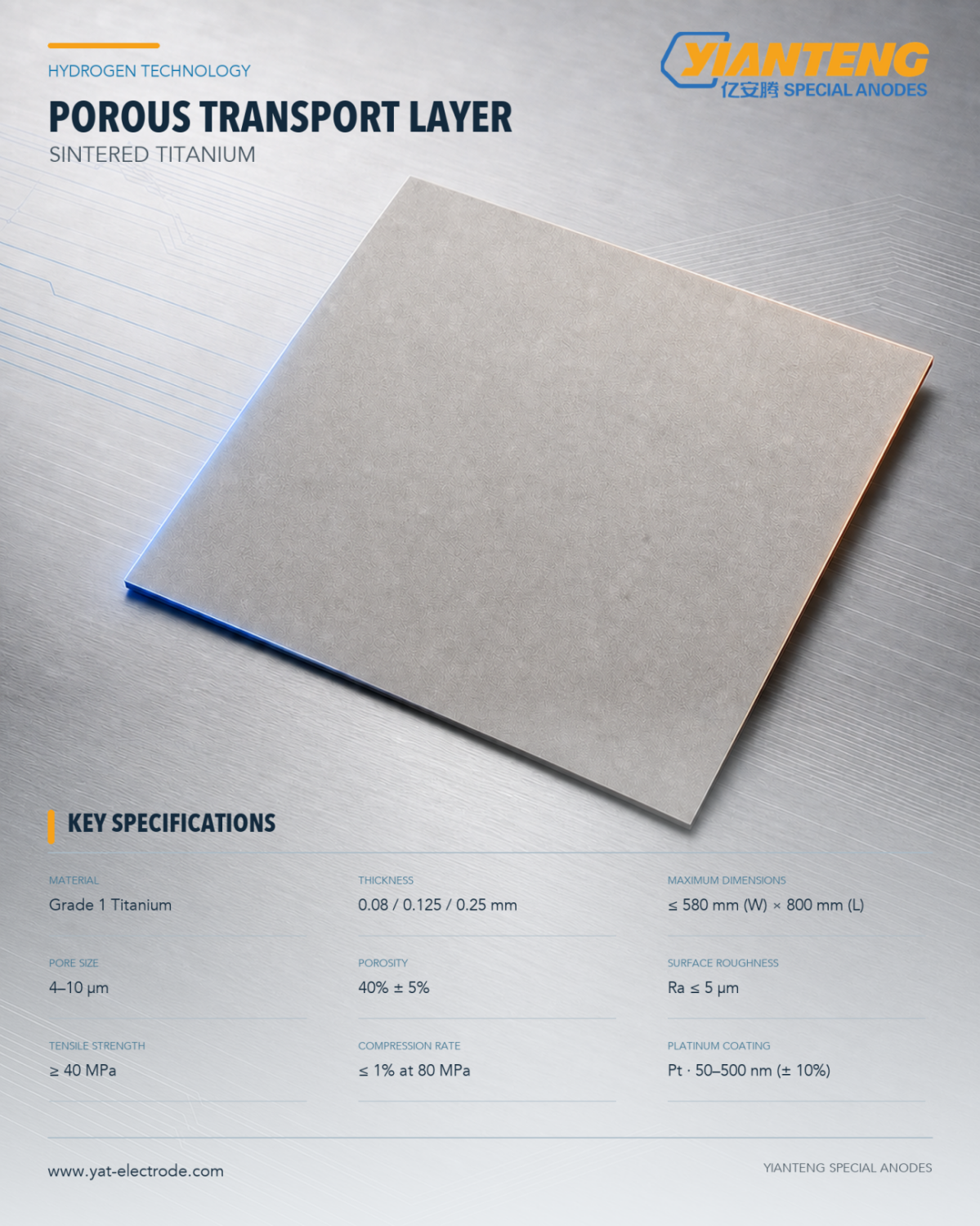
YIANTENG’s platinum-coated titanium PTLs combine high electrical conductivity with enhanced surface stability and interface performance, helping maintain low interfacial contact resistance and deliver long-term electrochemical durability under PEM anode operating conditions

Coating capability

PTL performance depends on how pore structure, surface condition, and coating design work together. Follow YIANTENG Special Anodes on LinkedIn and visit www.yat-electrode.com for practical insights into porous titanium PTLs and advanced coating technologies for PEM.