MMO Titanium Anodes for Reliable Chlorine GenerationYIANTENG engineers chlorine-evolution electrodes for coastal cooling water, seawater intakes, desalination pretreatment and offshore electrochlorination packages. Coating activity, active area, geometry and current feed are matched to the water, duty and cleaning strategy. |
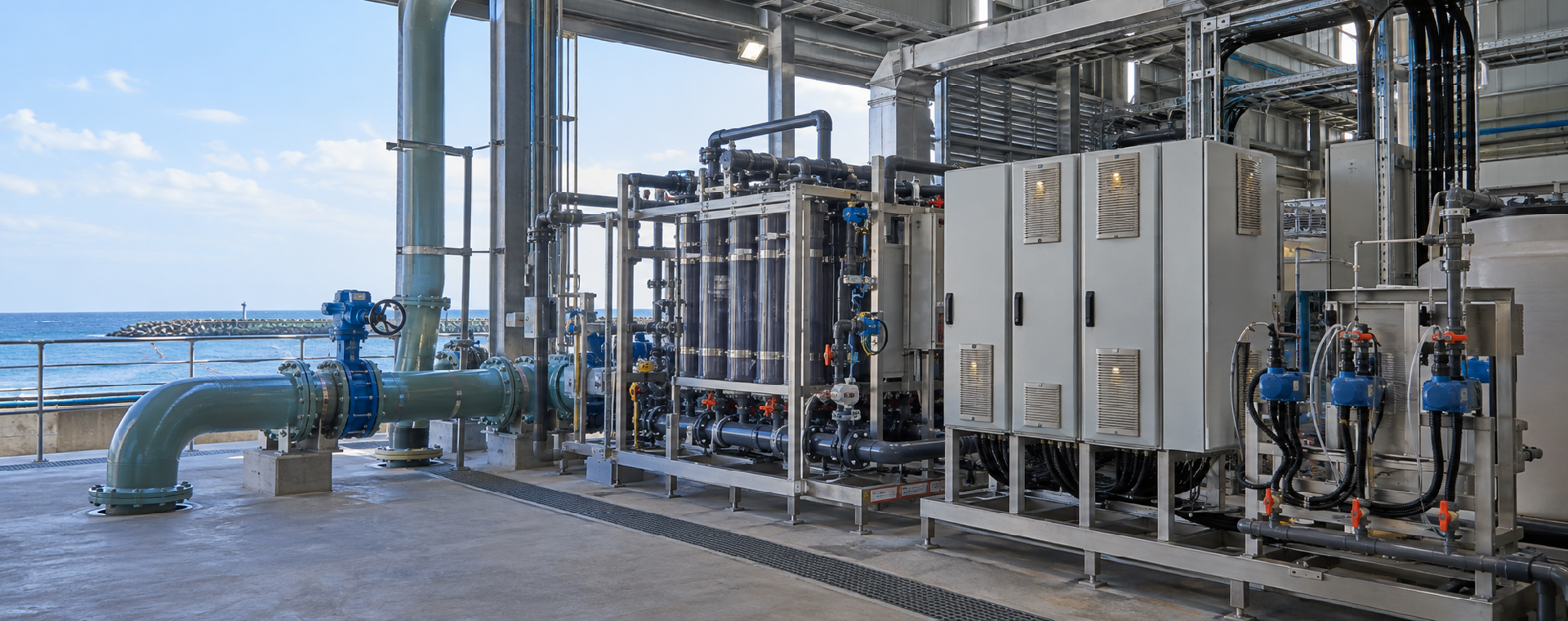
What seawater electrochlorination does | It converts chloride already present in seawater into a dilute oxidant stream at the point of use - without transporting and storing bulk chlorine. The generated hypochlorous acid and hypochlorite help suppress bacteria, slime, algae, mussels, barnacles and other marine growth in coastal power-station and chemical-plant cooling systems, LNG terminals, refineries, seawater intake screens and pipelines, desalination pretreatment systems, and offshore or marine electrochlorination packages. This helps protect pumps, distribution headers, condensers and heat exchangers from restricted flow, lost heat transfer and avoidable cleaning shutdowns. |
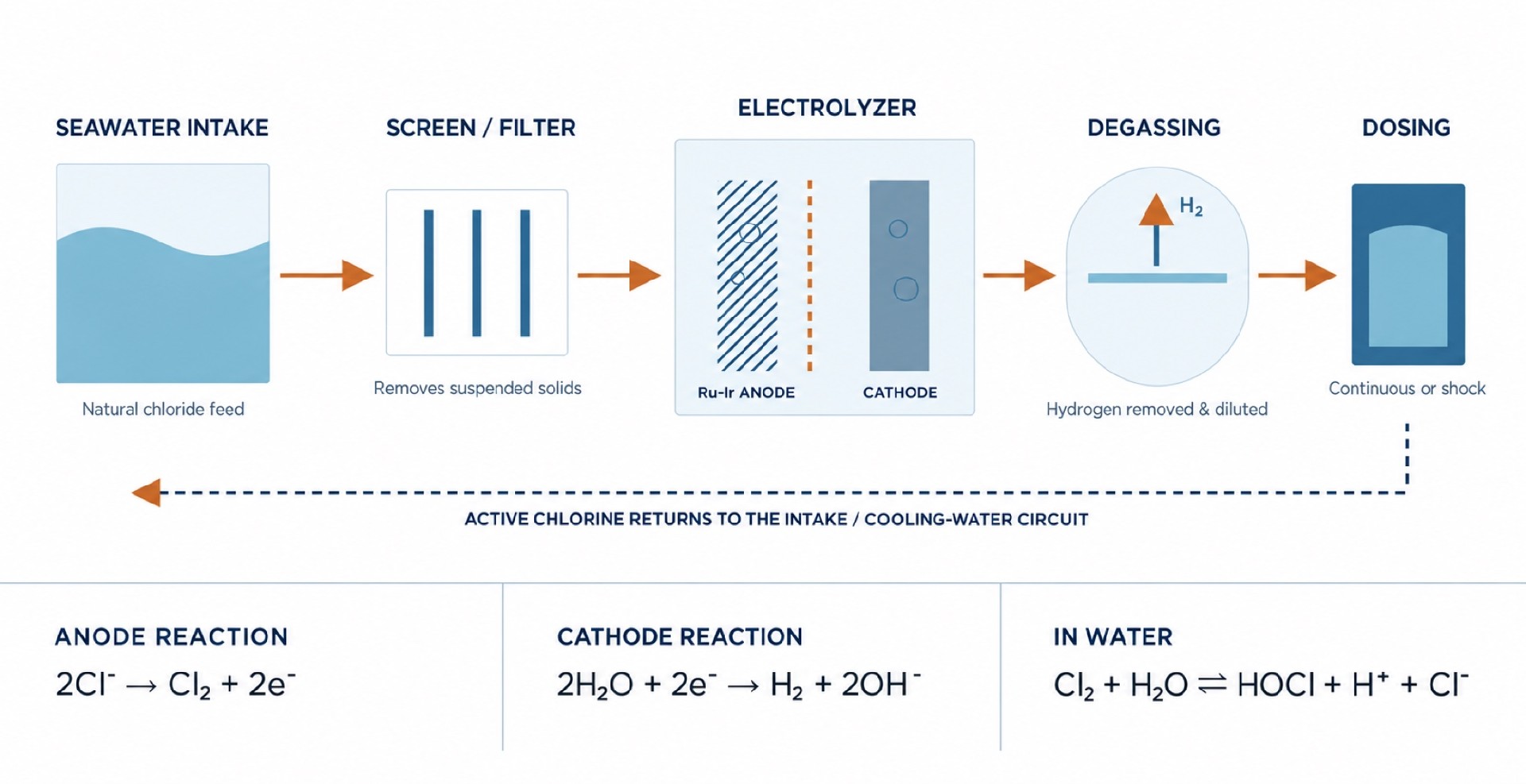
How seawater becomes an active-chlorine solution
Filtered seawater passes through an undivided electrolyzer. Chloride is oxidized at the coated anode; water is reduced at the cathode. The product stream is separated from hydrogen and dosed continuously or intermittently.
The anode affects far more than chlorine output | When effective anode area falls or electrical resistance rises, the control system may demand more current or voltage to preserve output. That can hide progressive electrode ageing until energy use, scaling or downtime becomes difficult to ignore. |
| Output falls at the same current | Coating depletion, blocked active area, lower chloride concentration, cold seawater or impaired flow can reduce output. |
| Cell voltage rises over time | Declining catalytic activity, scale, loss of electrical contact, poor current distribution or a changed electrode gap can raise energy consumption. |
| Gas release becomes uneven | Non-uniform coating, deposits, poor hydraulic distribution or locally passive titanium can overload neighbouring active regions. |
| Cleaning frequency increases | Magnesium and calcium deposition, insufficient velocity or an unmatched cleaning strategy can shorten cleaning intervals. |
| Terminals run hot or corrode | Loose or contaminated contacts, seal failure, crevice exposure or undersized current paths can stop a cell. |
YIANTENG advantages for seawater electrochlorination
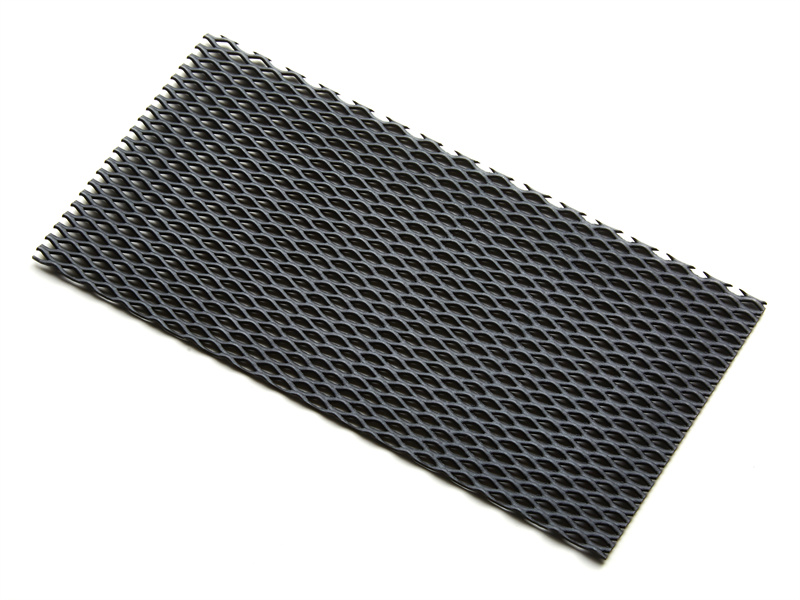
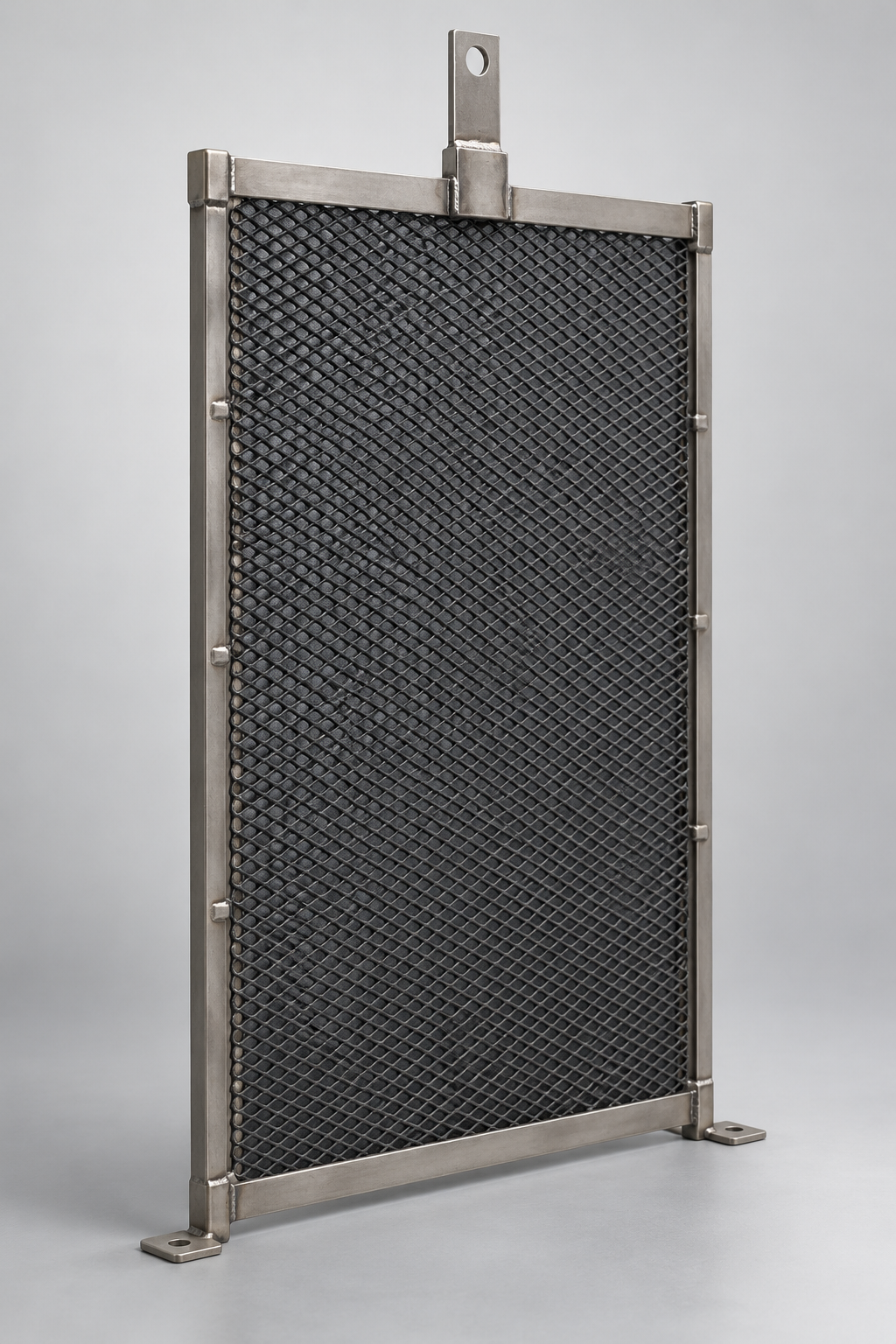 | Improved Ru-Ir coating formulationComposition and active loading are refined around chloride concentration, temperature, current density, chlorine-output duty and maintenance interval. Uniform active loading and adhesionSurface preparation, coating application and thermal conversion are controlled as one process to reduce thin regions and uneven ageing. Low chlorine-evolution potentialThe catalytically active coating supports chlorine evolution at a controlled anodic potential under the specified test conditions. Fixed- or reversing-polarity supportElectrode configuration is matched to the specified polarity strategy, current loading and cleaning logic. Replacement and recoating serviceNew electrodes can be produced from drawings or samples, and used titanium structures can be evaluated for recoating. |

Send a message