X

MMO Titanium Anodes for Electrolytic Copper Foil

YIANTENG supplies application-matched titanium anodes and ready-to-install electrode assemblies for battery-foil and PCB-foil lines. Anode geometry, active coating area, current distribution and conductive connections are coordinated around the cell, cathode drum and operating conditions.
electrolytic-copper-foil-hero.png

How Electrolytic Copper Foil Is Formed

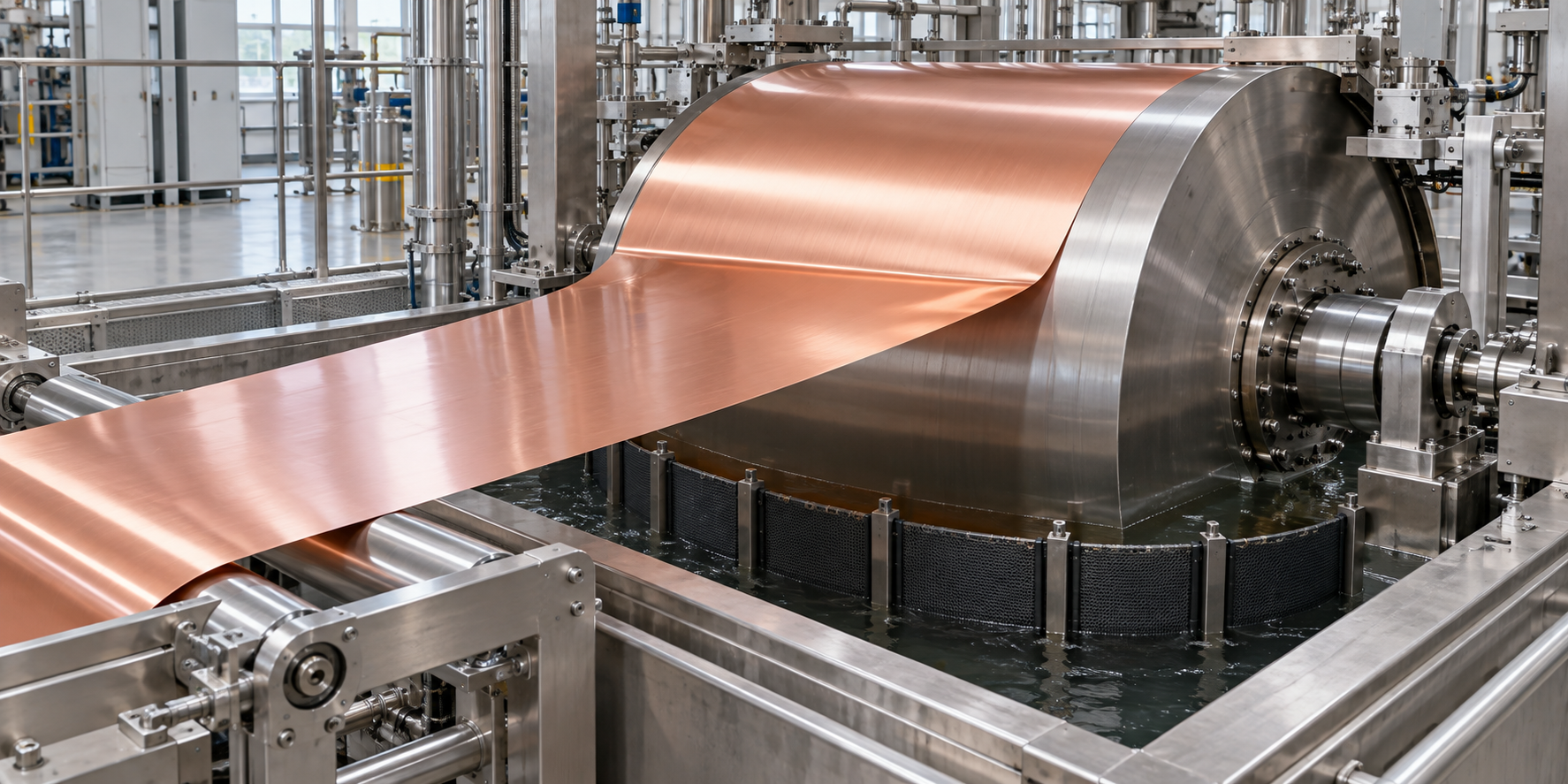
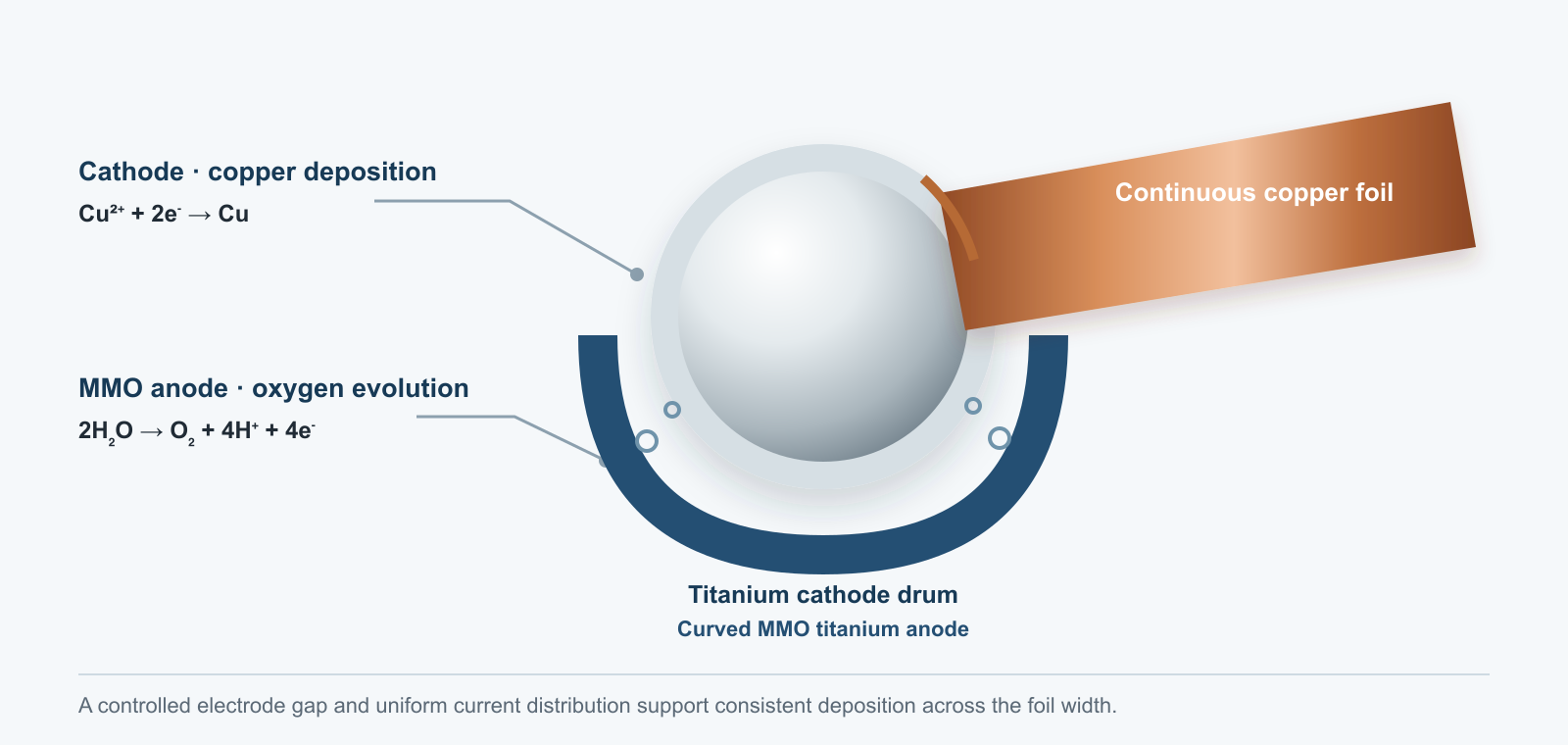
Copper ions are reduced onto a rotating titanium cathode drum while the insoluble MMO titanium anode sustains the oxygen-evolution reaction. The deposited copper layer is continuously peeled from the drum as foil.
copper-foil-electrodeposition-diagram.png

How the Anode Controls the Copper Deposition Environment

The anode defines the electric field, working gap and oxygen-evolution interface surrounding the cathode drum. These conditions directly affect where copper deposits, how evenly it grows and how stable the process remains throughout a production campaign.

Problems
Reasons
Recurring thickness variation and rising cell voltage
Unstable anode-to-drum gap. A dimensionally stable titanium structure preserves the designed electrolyte path. Distortion or uneven installation changes ohmic resistance and deposition rate across the web.
Local voltage rise and premature recoating
Non-uniform active coating. Thin or poorly bonded areas carry disproportionate oxygen-evolution load, deactivate earlier and redistribute current to the remaining active surface.
Higher energy use and unstable production current
High or drifting oxygen-evolution potential. As the anodic overpotential increases, cell voltage and heat load rise; continued coating deactivation eventually threatens line continuity.
Roughness variation, nodules and pinholes
Poor bubble release or uneven electrolyte flow. Oxygen coverage changes resistance and mass transfer in the narrow gap, creating a different deposition environment from one area to another.
Particle-related defects in ultra-thin foil
A contaminating or consumable anode surface. An insoluble MMO titanium anode avoids continuous lead dissolution and removes one source of metal-bearing sludge and particles.

Foil morphology and mechanical properties also depend strongly on copper and acid concentration, chloride, organic additives, temperature, circulation, cathode-drum condition and downstream treatment.

Why Choose MMO Titanium Instead of Lead-Based Anodes

MMO titanium keeps the electrode geometry and electrolyte condition more stable during continuous high-current-density operation.

Engineering factor
MMO titanium anode
Traditional lead-based anode
Working geometry
Stable panel profile and electrode gap.
Consumption and surface-film growth can change the profile.
Bath cleanliness
No continuous dissolution of the titanium body.
Lead-bearing corrosion products and sludge require control.
Current distribution
Panel segmentation and active area can be matched to the drum.
Distribution may shift as the surface condition changes.
Cell voltage
Ir-based MMO coating is designed for oxygen evolution.
Changing oxide films can increase or destabilize polarization.
Maintenance route
Inspect, strip and recoat suitable titanium substrates.
Consumed anode material is replaced and sludge removed.

YIANTENG MMO Titanium Anodes for Copper Foil Lines

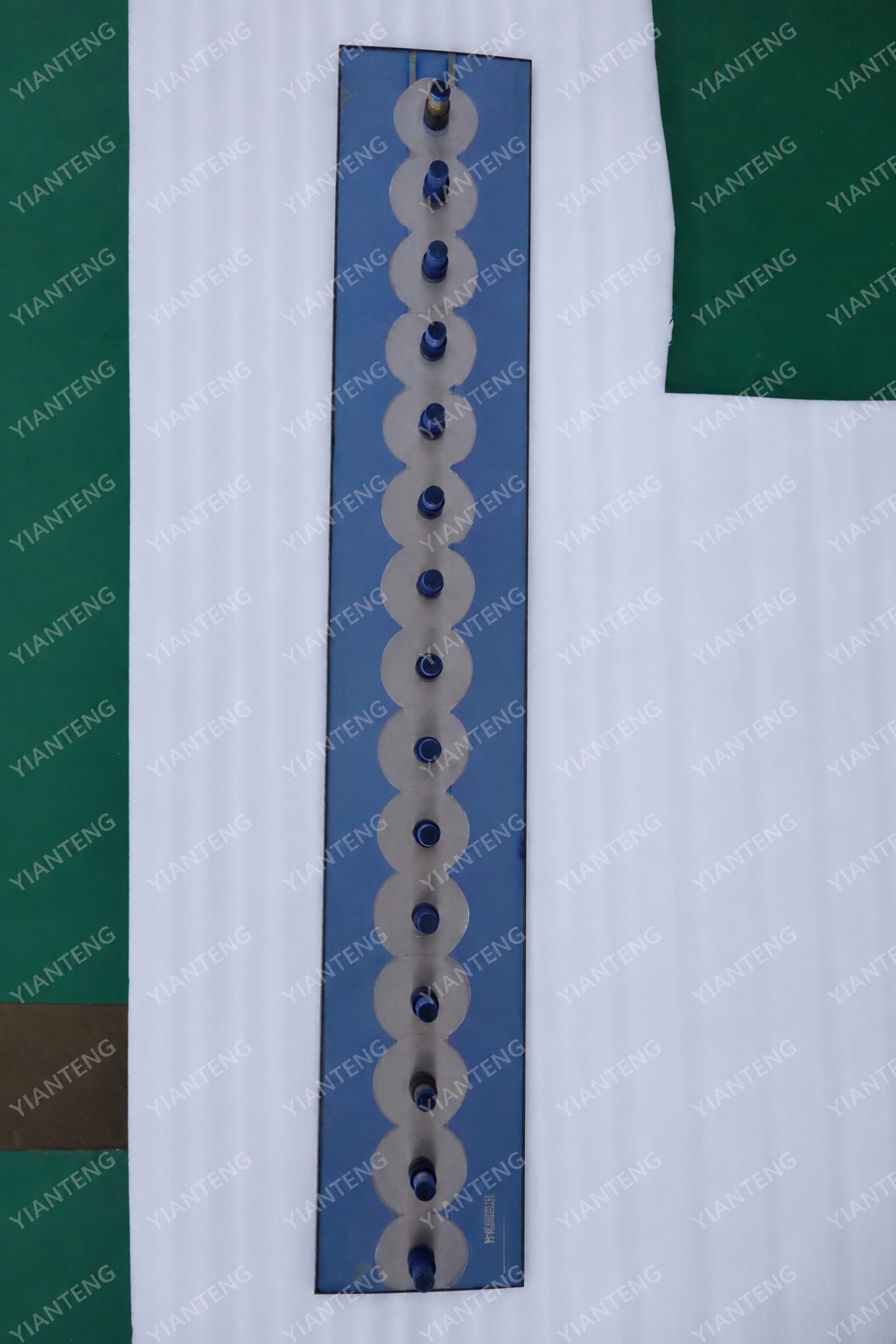
YIANTENG coordinates the titanium panel, modified iridium-based coating and conductive connection around the cathode drum, electrolyte and production current.
copper-foil-anode-yanteng-watermarked.jpg

Curved or segmented titanium anode panels with project-matched active area and conductive connection.
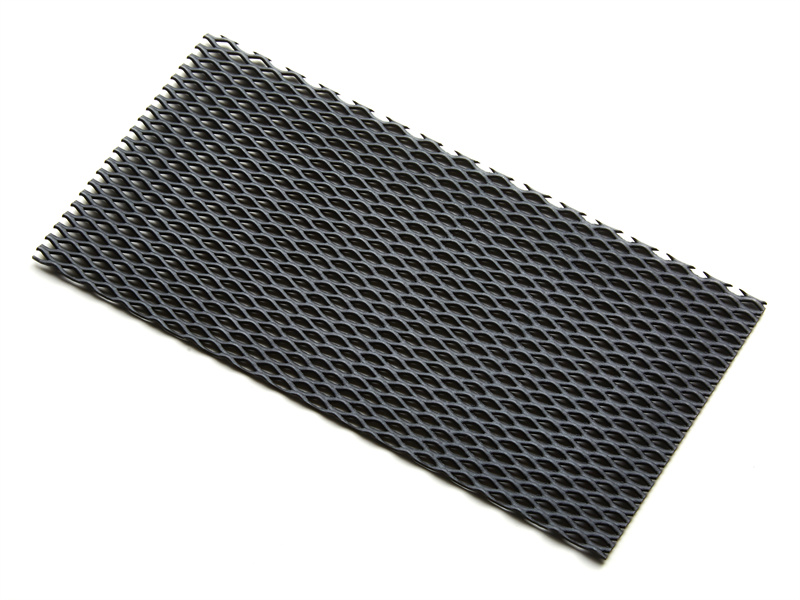
Modified iridium-based MMO coating
Formulation and loading are matched to current density, acid/chloride level, temperature and required service interval.
Coating uniformity and thickness
Reference acceptance values: coating uniformity ≤5% and thickness ≥5 μm by XRF. Multi-point control reduces local under-loading and early coating exhaustion.
Oxygen-evolution potential
Reference value: ≤1.60 V. A lower, stable potential reduces the anodic contribution to cell voltage and helps limit energy consumption as the coating ages.
Surface morphology
A foil-quality outcome influenced by local current density and bubble removal. Additives, temperature, flow and drum surface remain the main morphology controls.
Inspection and recoating support
Suitable titanium substrates are stripped, checked for damage and recoated, retaining the mechanical structure and shortening the replacement cycle.

Send a message


If you have questions or suggestions, please leave us a message,we will reply you as soon as we can!