X

Platinum Coated Plated Titanium Anode

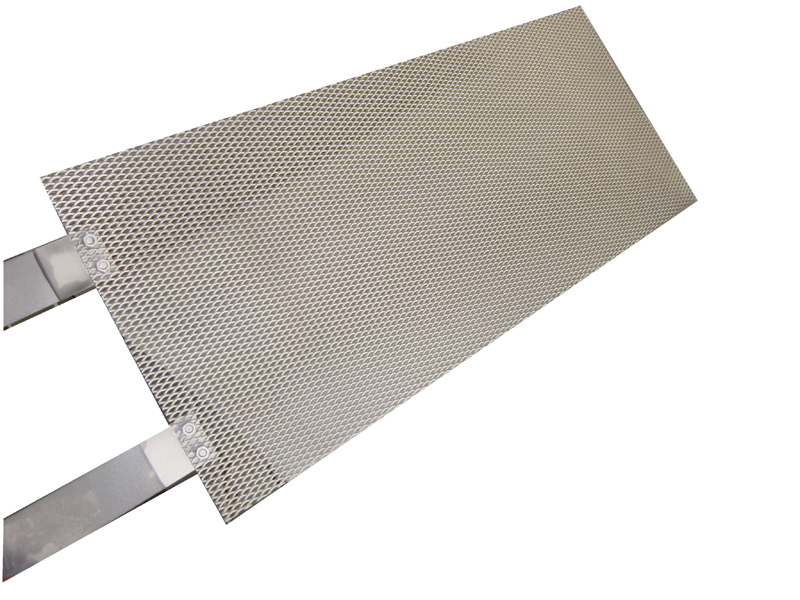
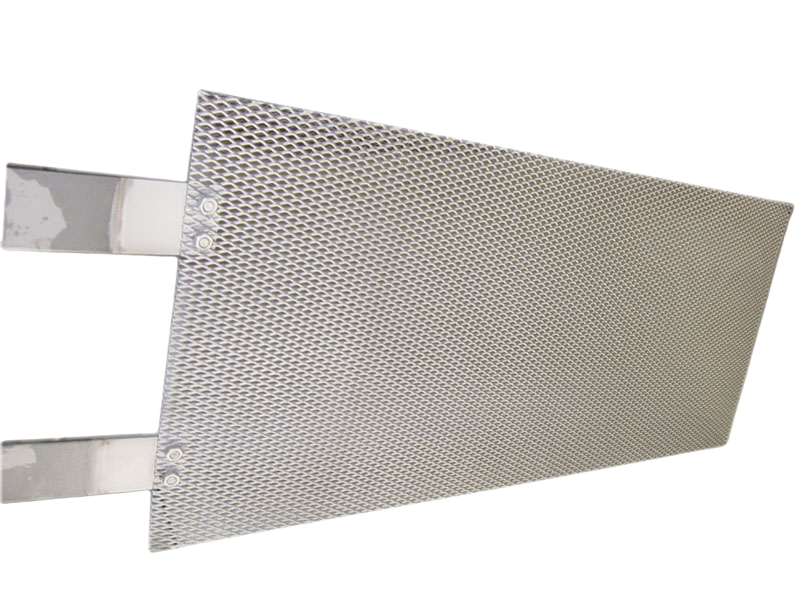
YIANTENG platinum-coated titanium anodes—also known as platinized titanium anodes or Pt/Ti electrodes—place a platinum active surface on a lightweight, formable titanium structure. The result brings platinum to the electrochemical interface without the mass and cost of a solid-platinum electrode.

 Inquire Now
Platinum Coated Plated Titanium Anode
Pt/Ti

What the platinum coating contributes.

A highly active catalytic surface

Platinum provides active sites for adsorption, charge transfer and product release at the electrode–electrolyte interface. In a compatible reaction, this accelerates electrode kinetics and reduces the activation energy required to sustain the electrochemical process.

Lower and more stable polarization demand

For the correct anodic reaction and electrolyte, an active platinum surface can reduce activation overpotential and stabilize the working electrode potential. This limits avoidable voltage loss and heat generation at the anode, although total operating voltage still depends on the complete electrochemical system.

A conductive interface for concentrated current transfer

A continuous, uniform platinum layer provides a conductive electrochemical interface across the specified active area. This supports stable current transfer at demanding current density while reducing local weak points where resistance, polarization or substrate exposure could develop.

Low consumption and cleaner electrolyte control

In compatible media, platinum remains electrochemically stable and is consumed slowly. The coating avoids continuous base-metal dissolution and anode sludge, helping preserve electrolyte purity and the defined active surface. Actual current efficiency remains dependent on electrolyte chemistry, mass transport and system design.

Surface, interface and substrate—engineered together.

Performance depends on platinum coverage, interfacial adhesion and titanium preparation working as one electrode system.

 Platinum active layer                  Controlled coverage and thickness for the specified electrochemical duty.
 Prepared titanium interface                  Surface preparation is controlled to promote adhesion and uniform platinum deposition.
 Commercially pure titanium                  Plate · Mesh · Tube · Rod · Wire · Custom fabricated assemblies

Engineered for the process. Controlled at the surface.

YIANTENG combines titanium fabrication, defined surface preparation and controlled platinum deposition. Geometry, coated area and inspection requirements are confirmed before production rather than left as generic catalogue options.

Custom forms, active areas and electrical connections

Plate, expanded mesh, tube, rod, wire and welded assemblies can be produced to customer drawings. YIANTENG can define single- or double-sided coating, coated boundaries, uncoated contact zones, edge treatment, mounting features and titanium or copper-integrated current connections for the electrolyzer, plating tank or electrochemical equipment.

Specified platinum thickness, loading and uniformity

Platinum thickness or mass loading is selected from the electrolyte, current density, temperature, operating schedule and target life. The production specification can state nominal value, tolerance, measurement basis and sampling locations across the active area so that uniformity is evaluated as a distribution—not from one reading.

Controlled pretreatment and coating adhesion

Titanium surfaces are cleaned and prepared by the appropriate mechanical and chemical sequence before platinum deposition. Pretreatment is controlled to remove contamination, activate the interface and create a repeatable surface condition; adhesion can be checked by an agreed bend, tape or witness-sample method.

Documented inspection and replatinizing support

Dimensions, appearance, platinum thickness or loading, uniformity and adhesion can be recorded against the confirmed inspection plan with batch traceability. Returned assemblies can be assessed for coating removal, substrate repair and replatinizing when the titanium remains suitable for reuse.

For processes where current distribution and bath integrity matter.

Precious-metal and decorative electroplating

Industrial plating and profile-matched auxiliary anodes

Electronics, PCB and semiconductor processing

Chemical electrolysis and impressed-current cathodic protection

Pt/Ti or Pt/Nb?

Pt/Ti is a cost-effective choice where the electrolyte and anodic potential are compatible with titanium. Fluoride-containing media, elevated anodic potential, long small-diameter conductors or other duties outside titanium’s compatible operating window can justify evaluation of Pt/Nb or a copper-cored construction. Final selection must be based on the complete electrolyte, electrical load and electrochemical equipment geometry.

Match the platinum anode to your process.

Discuss your application
YIANTENG

Application

General Metal plating

General Metal plating

Application field and principle introductionElectroplating process is to use the principle of electrolysis to lay a layer of metal on the conductor. Electroplating refers to a kind of surface processing method, in which the base metal is used as cathode in the salt solution containing the pre

Learn more >>

Get A Quote

Send a message

If you have questions or suggestions, please leave us a message,we will reply you as soon as we can!