X
 PCB electroplating engineering

MMO Titanium Anodes for PCB Copper Plating

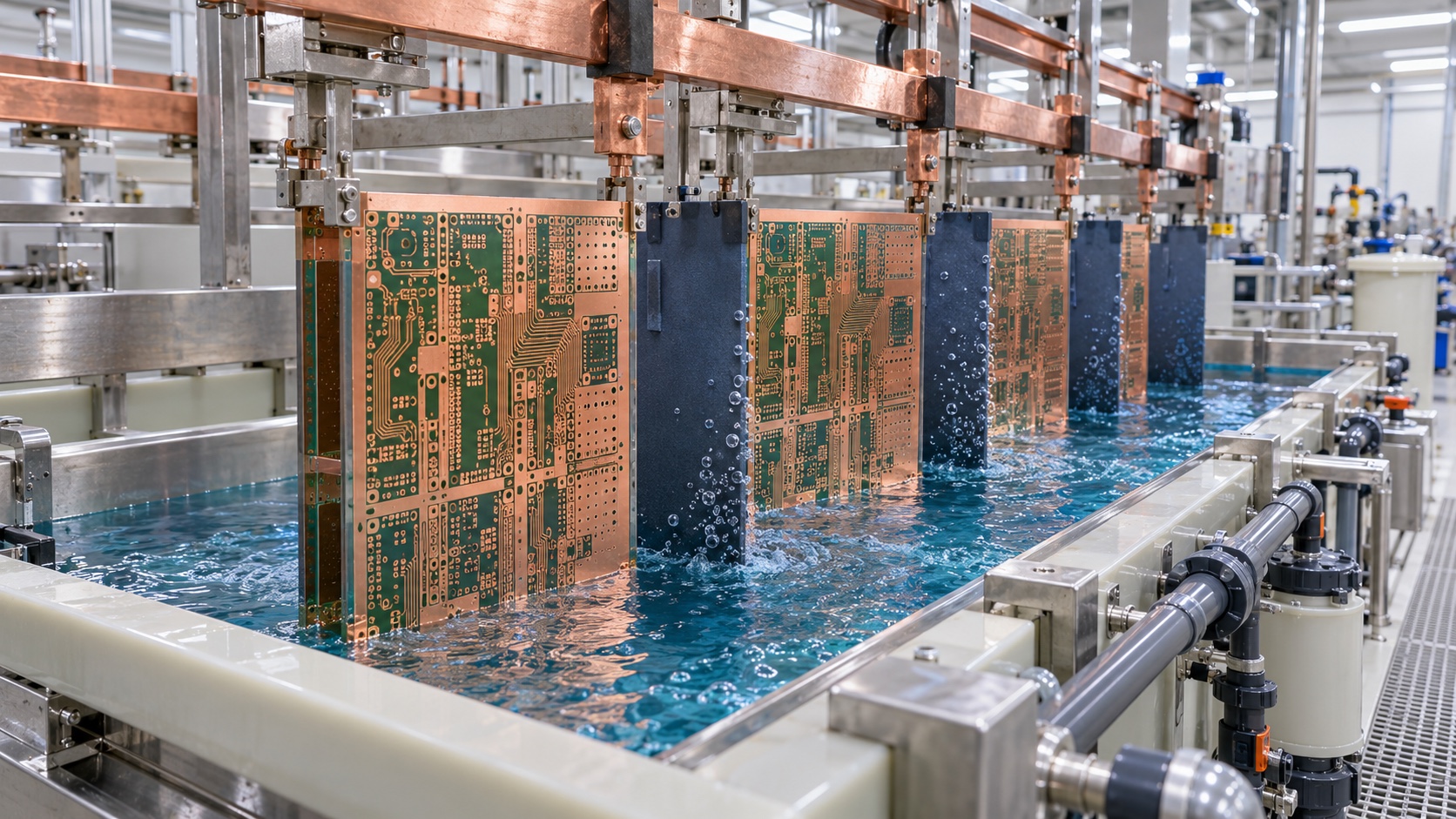
YIANTENG develops application-matched insoluble anodes for DC and periodic-pulse-reverse PCB plating. Electrode geometry, current feed, coating activity and bubble release are coordinated with the equipment, chemistry and copper-replenishment strategy.
pcb-copper-plating-line-upload.jpg

How PCB Copper Plating Works

Copper ions are reduced onto the PCB cathode while the insoluble MMO titanium anode sustains the counter-reaction and preserves its designed geometry. PCB copper-plating systems are commonly organized by line configuration—horizontal conveyorized, vertical continuous or conventional vertical hoist-type—and may operate with DC or periodic-pulse-reverse current. These platforms support conformal plating, blind-microvia filling, through-hole filling, and panel or pattern plating for multilayer boards, HDI and IC substrates.

                       
MMO titanium anode
Oxygen evolution
2H₂O → O₂ + 4H⁺ + 4e⁻
Cu²⁺   Cu²⁺   Cu²⁺
→

Copper ions move through the electrolyte toward the PCB surface.

                                   
PCB cathode
Copper deposition
Cu²⁺ + 2e⁻ → Cu

How Titanium Anode Conditions Appear in PCB Production

A dimensionally stable anode can improve repeatability, but only when its electrical path, mechanical design, catalytic surface and gas release remain uniform. Problems at the anode often first appear as a board-quality issue.

Problems
Reasons
Top-to-bottom or edge-to-center thickness variation
Uneven current feed or voltage drop through the titanium structure. Long current paths, limited feed points, frame design or weak contacts can turn a discharge gradient into a plating-thickness gradient.
Poor throwing power, via voids or inconsistent dimple
Active-area geometry is not matched to the board, shielding, waveform and flow. Local current-density and mass-transfer differences can shift copper from holes or vias to the surface.
Rising brightener consumption and unstable bath response
The coating is too active for the additive package or has aged unevenly. Coating formulation must balance oxygen-evolution efficiency with controlled organic-additive contact.
Upper/lower panel imbalance during long runs
Oxygen bubbles temporarily screen the active surface. A vertical bubble-coverage gradient changes local resistance unless panel form and electrolyte movement release gas evenly.
Short anode life or abrupt voltage increase
Coating design does not match DC or PPR duty, peak current or bath chemistry. Local under-loading, weak adhesion and poor contacts concentrate stress and accelerate deactivation.

Why Choose MMO Titanium Anodes Instead of Soluble Copper Anodes?

MMO addresses current-distribution, bath-cleanliness and maintenance problems by keeping a fixed electrode geometry. It requires a separate, controlled copper-replenishment route.

Engineering factor
MMO titanium anode
Soluble copper anode
Thickness uniformity
Fixed geometry keeps the active area and current field repeatable.
Dissolution gradually changes surface profile and working area.
Pulse and via performance
Coating, feed points and active area can be matched to DC or PPR duty.
Anode-film condition can narrow the pulse operating window.
Bath and additive stability
No copper-anode sludge; coating activity can be selected for the additive package.
Bags, film condition and sludge require routine control.
Service and maintenance
Suitable titanium structures can be inspected and recoated.
Copper refill, bags, baskets, films and sludge need ongoing attention.

YIANTENG MMO Titanium Anodes for PCB Plating Lines

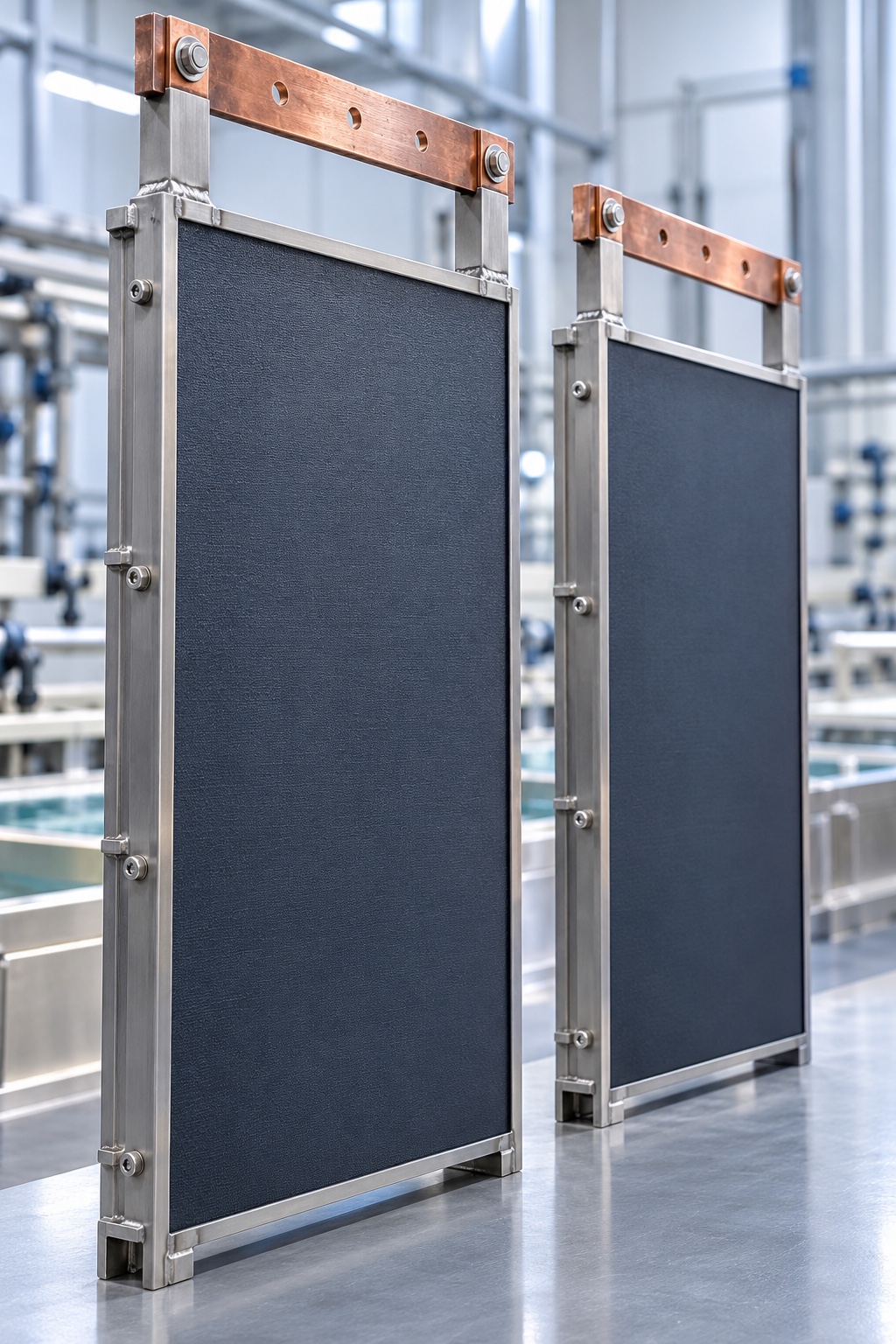
YIANTENG coordinates the titanium substrate, current-feed layout and modified iridium-based coating around the line geometry, waveform, bath chemistry and service target.
pcb-mmo-anode-panels-upload.jpg
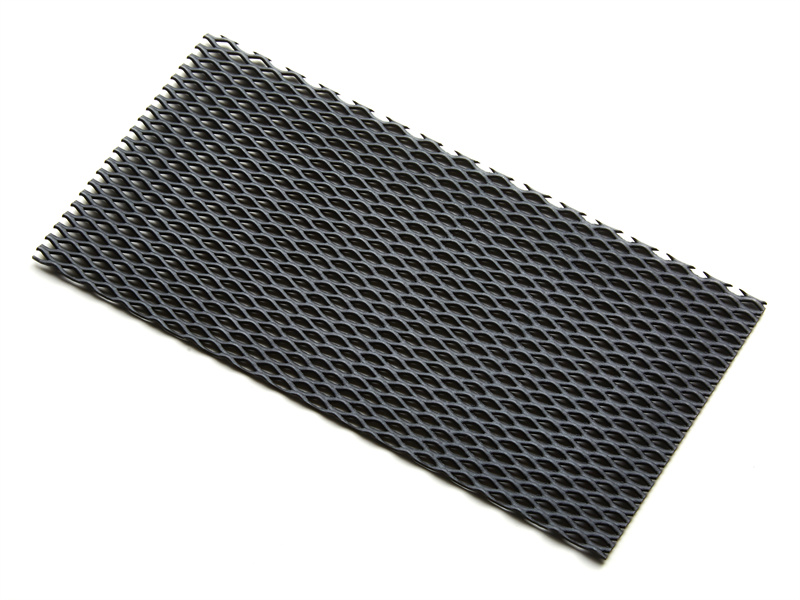
MMO-coated titanium panel assemblies with project-matched active area and conductive connections.
Coating Adhesion and Uniformity
Controlled cleaning, surface preparation and thermal conversion create a mechanically anchored catalytic layer. Multi-point control reduces local thin regions and uneven ageing.
Coating Thickness and Active Loading
Thickness, formulation and active loading are specified together for the current mode. Distribution is checked across the working area.
Surface Cleanliness
Controlled preparation and handling remove oil, oxide residue and loose particles before coating, supporting adhesion and limiting manufacturing contamination.
Service-Life Design
Expected life is matched to DC or PPR duty, peak current, additives, contaminants, temperature, contact condition and shutdown practice.
Inspection and Recoating Support
Returned assemblies can be stripped and checked for flatness, weld integrity, contact condition and substrate damage. Suitable titanium structures are recoated.

Send a message


If you have questions or suggestions, please leave us a message,we will reply you as soon as we can!