|
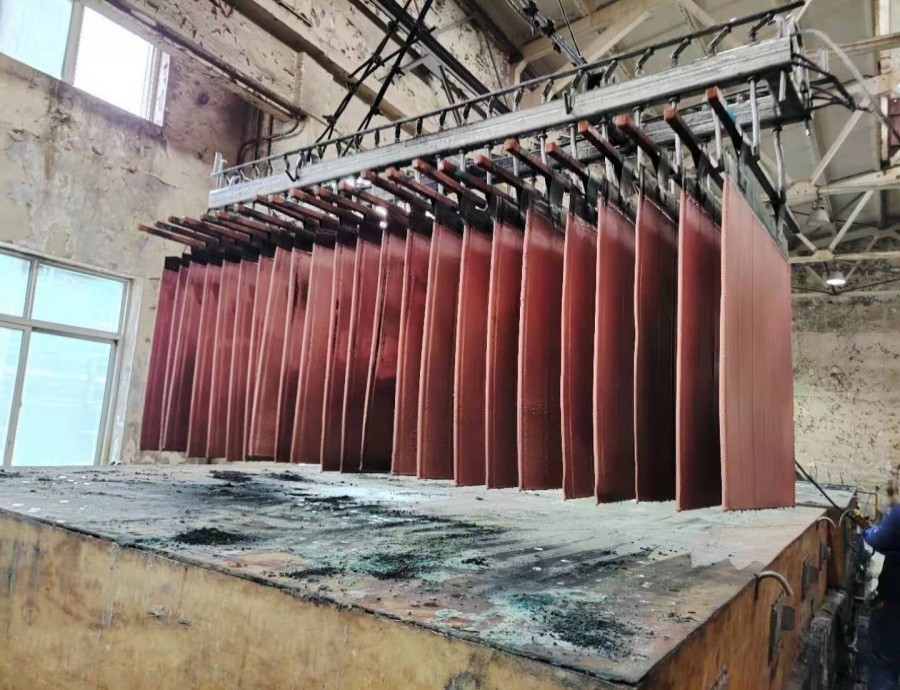
Hydrometallurgy and Electrowinning
Hydrometallurgy recovers non-ferrous metals from chloride, sulfate or mixed chloride-sulfate solutions. After leaching and solution purification, direct current deposits the target metal on the cathode. The anode must carry continuous current, tolerate an aggressive electrolyte and preserve the designed electrode gap. | Traditional lead-alloy anodes change as they operate and can add weight, deformation, sludge and impurity-control work. A titanium-supported PbO₂ system separates the structural substrate from the active anodic surface and allows suitable electrodes to be inspected and recoated. |
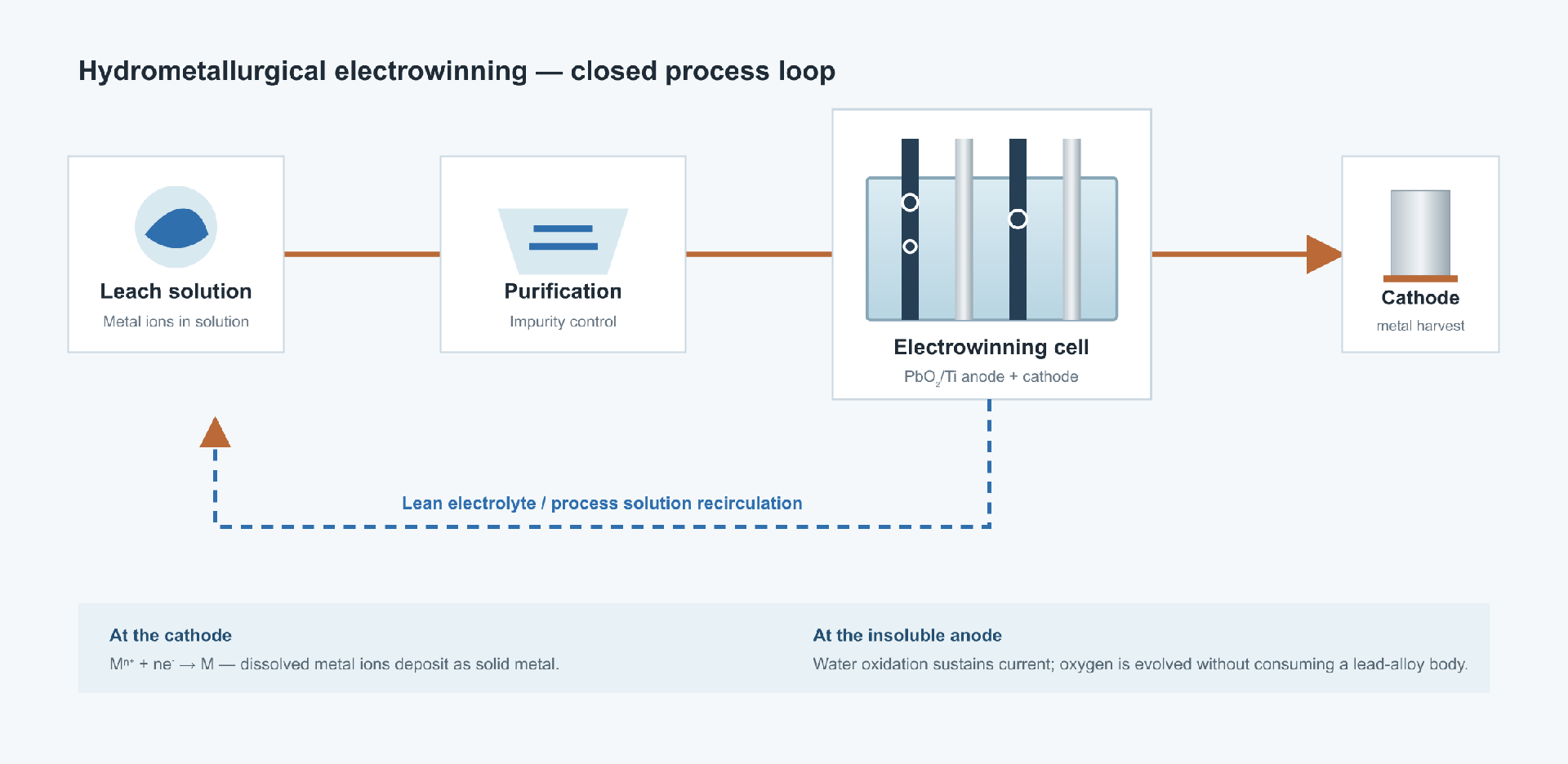
How Hydrometallurgical Electrowinning Works
Purified metal-bearing solution enters the cell. Metal ions receive electrons at the cathode and deposit as solid metal, while the insoluble anode sustains the counter-reaction and the lean electrolyte returns to the process circuit.
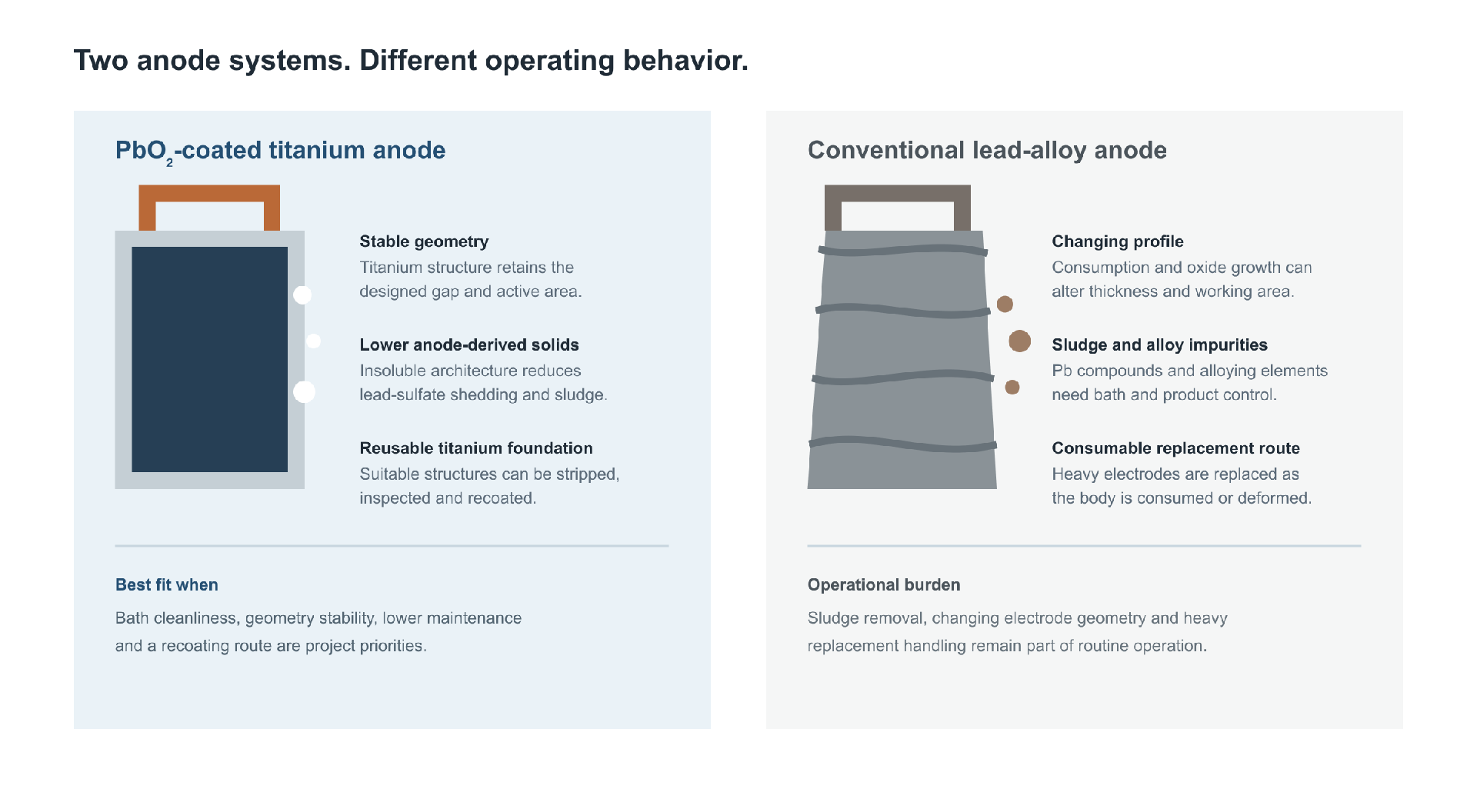
Why PbO₂/Ti Instead of a Conventional Lead-Alloy Anode?
The choice is not simply “lead versus no lead.” It is a comparison between a consumable, heavy lead-alloy body and a dimensionally stable titanium structure carrying an engineered multilayer PbO₂ working surface.
How YIANTENG Builds and Controls the Electrode
Key Advantages for Electrowinning
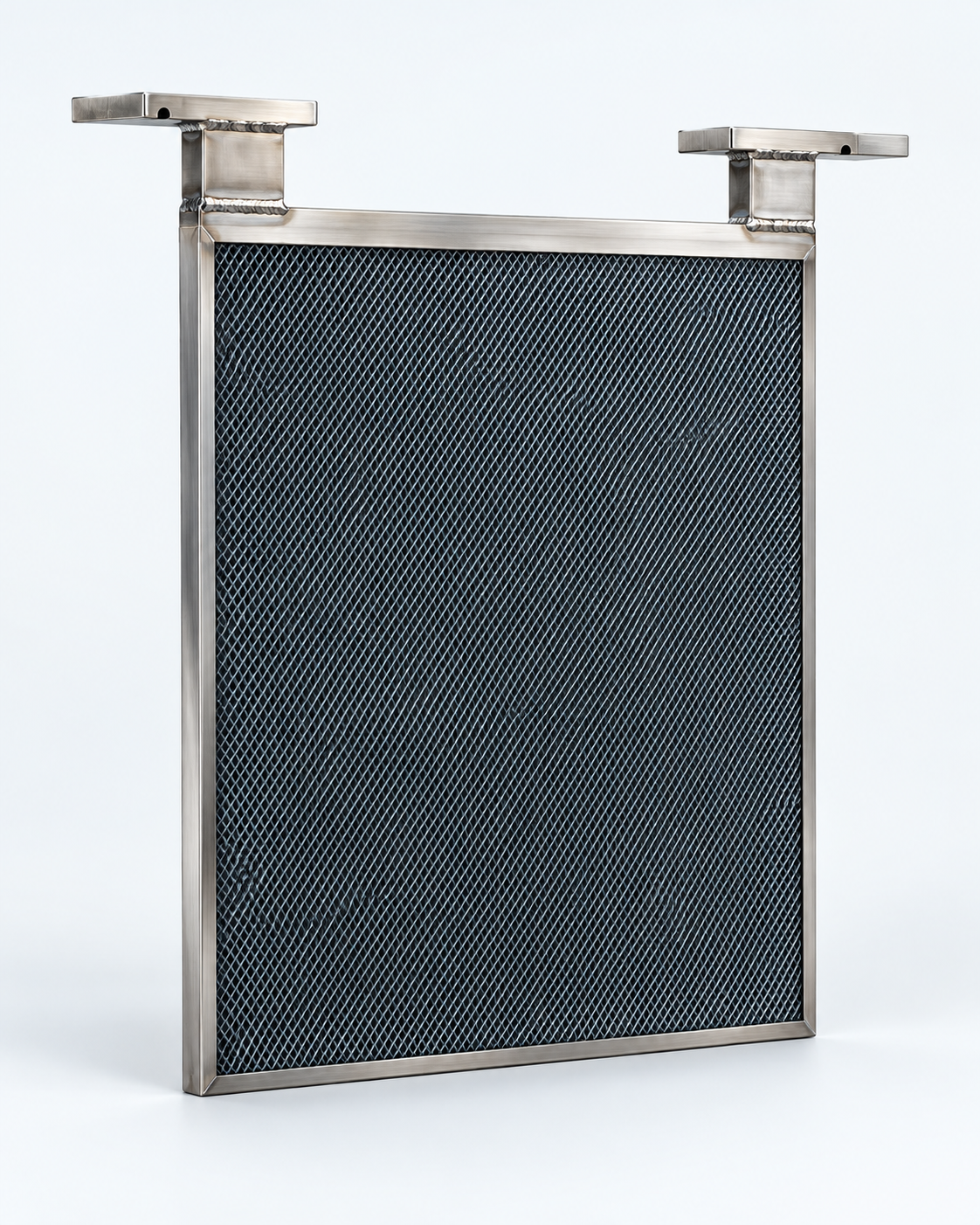 | Lower Cell VoltageCell voltage can be approximately 0.05–0.1 V lower than with a lead-alloy anode, helping reduce power consumption during continuous electrowinning. Longer Service LifeThe corrosion-resistant PbO₂ working surface protects the reusable titanium structure, extending service intervals and reducing electrode changes and production downtime. Lighter, Easier HandlingThe titanium mesh structure is considerably lighter than a solid lead-alloy electrode, making installation, lifting and routine cell maintenance easier. Cleaner ElectrolyteThe insoluble coating limits lead-sulfate shedding and contains no Sn, Sb or Ag alloy additions, reducing sludge, tank cleaning and anode-derived contamination. More Uniform ElectrowinningThe open mesh promotes electrolyte circulation and more even current distribution, supporting steadier deposition and more consistent cathode-metal quality. |



Send a message